
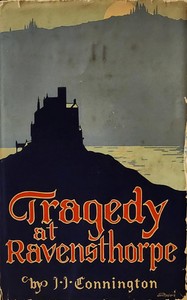
Tragedy at Ravensthorpe by J. J. Connington
J.J. Connington's Tragedy at Ravensthorpe is a masterclass in the classic 'locked-room' mystery, but with all the sprawling drama of a country house weekend gone terribly wrong.
The Story
The story kicks off with Sir Clinton Driffield (the host, not the detective) gathering a mixed bag of relatives and acquaintances at his estate. There's simmering resentment over money, failed romances, and general aristocratic unease. After a loud gunshot echoes through the house, they break into his study to find him dead, a pistol nearby, and the windows securely fastened. The local police are ready to call it a suicide and be done with it.
Enter Chief Constable Sir Clinton Driffield (our detective), a methodical and sharp-minded investigator. He immediately pokes holes in the suicide theory. The physical evidence just doesn't add up. From there, it's a meticulous process of elimination. He interviews each guest, unraveling their alibis and hidden connections, exposing layers of greed and personal vendettas. The real pleasure is watching him piece together a timeline and a method from a handful of seemingly insignificant details—a misplaced book, the condition of the fire, the trajectory of the bullet.
Why You Should Read It
This isn't a thriller with car chases; it's a cerebral pleasure. Connington was a scientist in real life, and it shows. The plot is engineered like a precise machine. You get all the clues the detective gets. The fun is in trying to beat him to the solution, though I'll admit, I rarely did. Sir Clinton is a wonderfully understated hero—calm, logical, and quietly intimidating. He doesn't grandstand; he just knows things.
Beyond the puzzle, the book captures a fascinating moment in English society between the wars. You can feel the old order straining, with financial pressures causing rifts in these grand families. The characters might be suspects in a murder, but their motives are deeply human: fear, jealousy, and the desperate need to hold onto a vanishing way of life.
Final Verdict
Tragedy at Ravensthorpe is perfect for readers who miss the pure, clue-driven detective story. If you love the challenge of Agatha Christie's puzzles or the methodical pace of Freeman Wills Crofts, you'll feel right at home here. It's for anyone who enjoys sitting by the fire with a complex mystery, trusting that a clever author has played fair and is about to reveal a brilliantly logical solution. A satisfying, old-school treat for the mystery-loving mind.
This work has been identified as being free of known copyright restrictions. Distribute this work to help spread literacy.
Emily Taylor
2 months agoHaving explored several resources on this, I find that the evidence-based approach makes it a very credible source of information. I'm glad I chose this over the other alternatives.
Ashley Moore
11 months agoI've been looking for a reliable source on this topic, and the author doesn't just scratch the surface but goes into meaningful detail. It’s a comprehensive resource that doesn't feel bloated.
Sarah Williams
9 months agoAs a professional in this niche, the way it challenges the status quo is both daring and well-supported. I'll be citing this in my upcoming project.
Linda Williams
1 year agoThe digital formatting makes it very easy to navigate.
Linda Thomas
3 months agoExtremely helpful for my current research project.