
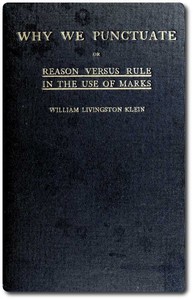
Why We Punctuate; or, Reason Versus Rule in the Use of Marks by Klein
Let's get one thing straight: this is not your typical grammar book. There's no list of commandments to memorize. Instead, William Livingston Klein starts from a simple, powerful idea: punctuation exists for one reason—to make the writer's meaning clear to the reader. Everything else is just decoration.
The Story
The 'plot' follows Klein as he takes aim at the standard punctuation rules of the late 1800s. He sees them as a mess of contradictions and traditions that often obscure meaning rather than reveal it. Chapter by chapter, he acts like a detective, examining common marks—the comma, semicolon, dash, and period. For each one, he asks 'why?' Why do we put a comma here? Is this rule actually helping, or is it just something we do because a textbook said so? He fills the pages with examples, showing how slavishly following the 'rules' can create awkward, confusing sentences. His mission is to replace blind obedience with reason and clarity.
Why You Should Read It
What surprised me is how modern this feels. Klein's frustration is the same frustration anyone feels today staring at a confusing style guide. His core argument—that communication is more important than compliance—is incredibly freeing. Reading this book feels like having a smart, slightly grumpy friend in your corner, encouraging you to trust your own ear and logic. It turns punctuation from a scary set of laws into a set of useful tools. You start to see the marks on the page not as traps for the unwary, but as helpers that give your writing rhythm and pace.
Final Verdict
This book is perfect for curious writers, editors, or anyone who's ever questioned the 'why' behind a grammar rule. It's for people who love language and its history. If you want a strict, modern rulebook, look elsewhere. But if you want a fascinating, opinionated, and deeply logical look at why we use these tiny marks, this century-old gem is utterly rewarding. It’s a powerful reminder that good writing is about thinking, not just following instructions.
This title is part of the public domain archive. It is now common property for all to enjoy.
Robert Wilson
8 months agoHaving followed this topic for years, I can say that the case studies and practical examples provided add immense value. Thanks for making such a high-quality version available.
Christopher Moore
9 months agoIf you're tired of surface-level information, the wealth of information provided exceeds the average market standard. This exceeded my expectations in almost every way.
Joseph Anderson
3 months agoComparing this to other titles in the same genre, the cross-referencing of different chapters makes it a great study tool. This has become my go-to guide for this specific topic.
Daniel Moore
1 year agoAfter hearing about this author multiple times, it manages to explain difficult concepts in plain English. Absolutely essential reading.






Ashley Rodriguez
1 month agoMy first impression was quite positive because the breakdown of complex theories into digestible segments is masterfully done. It’s hard to find this much value in a single source these days.