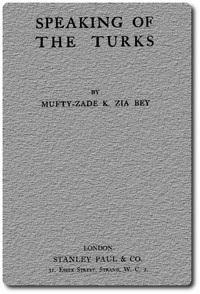
Speaking of the Turks by bey K. Ziya Mufti-zada
When a friend handed me Speaking of the Turks, they said, 'This was written a hundred years ago, but you'll swear it's from next Tuesday.' They weren't wrong. Bey K. Ziya Mufti-zada wrote this book in the twilight of the Ottoman Empire, right as it was gasping its last breaths and turning into the Turkish Republic. But don't let that history-class framing fool you—the voice is playful, fierce, and so human.
The Story
There's no single plot here—it's more like a long, clever letter from a very smart uncle who's seen a lot. Mufti-zada walks you through Turkish history, language, religion, and politics, all while dismantling the way Europe wrote about Turks. He's not just correcting the record; he's rewriting it with a twinkle in his eye. The central mystery builds around identity: What stays and what's lost when your empire shrinks to a nation? He looks at the young Turkish Republic and asks, 'Did it capture the true soul of the people, or just make a clean copy?' Spoiler: he doesn't let anyone—West or East—off the hook.
Why You Should Read It
Look, I love big sweeping histories, but sometimes they turn people into furniture at the bottom of a force-field chart. Not this one. Mufti-zada talks about scholars like they're his neighbors, and battles like boxing matches. His sentences are sharp, funny, and full of insider digs you actually need to search out a footnote for. I read aloud a paragraph about Turkey being 'not part of Asia, but a strong rival to it,' and sent it to three different friends at 10 P.M. This is how you want to learn about the formation of a nation: through glorious opinion wrapped in historical wreckage.
What hit me hardest was how he tackles so-called 'Ottoman decline.' Western books treat it like a slow fall from a flower bed; he shows it was a chaotic, violent, and complicated break-up of a huge family. He doesn't dodge the horrors, either—the poison, betrayals, and lost jobs feel uncomfortable new for me. You never sense he's polished his hurt away for foreign tourists.
Final Verdict
This is for: caffeinated history freaks, skeptical nationalists of any stripe, travelers who've been charmed by Turkish tea and stay curious, anyone looking for another voice a century before Edward Said—a voice wearing an Ottoman fez, scrappy, loud, arguing with a smile. If your only 'Middle East dossier' loads from textbooks or news tonight, this book will rattle your shelf in a good way. Highly relevant reads with remarkable pace. Rumor says hardcopy formats are tricky; lucky us plus e-publisher efforts bringing classic jolts back alive.
No rights are reserved for this publication. You do not need permission to reproduce this work.